Tuesday, 8 May 2018

Comparison - New structures: double and repeated comparatives

Image result for double comparatives exercises

DOUBLE COMPARATIVES
Comparison and contrast are expressed by the use of the…, the…with comparative adjectives in parallel clauses. This structure is used to show proportionate increase or decrease.
Structure: 
    the + comparative adjective + clause, + the + comparative adjective + clause
  • The more adventurous it is, the more I like it. (NOT The more it is adventurous, the more I like it.)
  • The less I see him, the more I like him.
  • The more he reads, the less he understands.
  • The older we grow, the wiser we become.
  • The higher you climb, the colder it gets.
  • The richer one grows, the greater one’s worries.
  • The less you spend, the more you save.
  • The sooner they go, the better it is.
A short form of this structure is used in expressions such as the following: 
  • ‘How do you like your coffee?’ ‘The stronger the better.’
  • ‘When should I start?’ ‘The earlier the better.’
You can the following exercises:
- One.
- Two.

REPEATED COMPARATIVES
Repeated comparatives describe things that are increasing or decreasing.
Structure: 
                adj-er and adj-er
                more and more + adjective
  • Mobile phones are getting more and more expensive.
  • As Zara grew, Amancio Ortega got richer and richer.
Exercises:
- One.
- Two.
- Three.

Wednesday, 2 May 2018

Conditional Sentences

Image result for conditional sentences
Conditionals are sentences with two clauses – an ‘if clause and a main clause – that are closely related. Conditional sentences are often divided into different types. 

Zero conditional

We use the zero conditional to talk about things that are always true.
  • If you heat water, it boils.
  • When the sun goes down, it gets dark.
  • It lights up if you push that button.
The present simple is used in both clauses.

First conditional

We use the first conditional when we talk about real and possible situations.
  • I’ll go shopping on the way home if I have time.
  • If it’s a nice day tomorrow, we’ll go to the beach.
  • If Arsenal win, they’ll be top of the league.
In first conditional sentences, the structure is usually if + present simple and will + infinitive. It’s not important which clause comes first.

Second conditional

The second conditional is used to talk about ‘unreal’ or impossible things.
  • If I won a lot of money, I’d buy a big house in the country.
  • Where would you live if you could live anywhere in the world?
  • If you didn’t smoke so much, you’d feel a lot better.
The structure is usually if + past simple and would + infinitive. It’s not important which clause comes first.

Look at the difference between the first and second conditionals.
  • In January: If it snows tomorrow, I’ll go skiing. It might snow tomorrow.
  • In August: If it snowed tomorrow, I’d go skiing. It almost certainly won’t snow tomorrow.
(From: https://learnenglish.britishcouncil.org/en/quick-grammar/conditionals-1)


Image result for conditional sentences

Third conditionals 


Third conditional sentences describe the past. They describe something that didn’t happen.
  • If I’d studied harder at school I would have gone to university.
He didn’t study very hard and he didn’t go to university.
  • We wouldn’t have got lost if you hadn’t given me the wrong directions.
She wasn't given the correct directions and she didn't find her way.
  • She might have finished the exam if she’d had more time.

She didn't finish the exam and she didn't have more time.

In third conditional sentences, the structure is usually if + past perfect and would + perfect infinitive (e.g. have done). It’s not important which clause comes first.

Notice that other modal verbs can be used instead of ‘would’ (e.g. ‘could’, ‘might’ ‘may’)

(From: https://learnenglish.britishcouncil.org/en/quick-grammar/conditionals-2)

EXERCISES for you to practise:

First Conditional:
Second Conditional:
First and Second Conditionals:
Third Conditional:

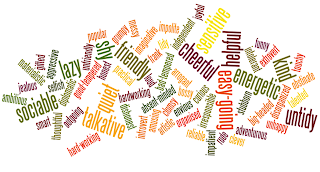
Adjectives describing personality


Image result for personality adjectives
After studying quite a lot of adjectives and adjectives to describe personality, you can have a look at the following links and do the exercises in order to practise.

Order of adjectives 1.
Order of adjectives 2 with a multiple choice exercise.
Matching exercise 1.
Matching exercise 2.
Test. (Scroll down to see the test 'Description of personality'). There are three mistakes. Can you find them?


Wednesday, 25 April 2018

Book Day

Last Monday, our school celebrated the Book Day in different ways.
One of them consisted in reading -with a QR reader app on our mobile devices- different QR Codes that led us to listen to some voice recordings about our students' favourite books.
An enjoyable activity that combines ITs (using their mobile devices to decode and listen), reading (students commented on the books they had already read), speaking (students had to record themselves speaking English, improving their oral skills) and listening skills (all students had the chance to listen to their classmates' recordings).


Monday, 16 April 2018

Monday, 9 April 2018

Jane Austen

Find below the interesting presentation about Jane Austen that Kirsten prepared for us .